DO the math, DON'T overpay. We make high quality, low-cost math resources a reality.

Showing posts with label movies. Show all posts

Thursday, August 22, 2019

Mathematicians in the Movies

The math that many mathematicians pioneers captures the imagination, piquing the interest of millions. Some of their life stories have been equally captivating, and Hollywood has often used them as the subjects of biopics, especially during awards season. If you're looking for a movie about math to watch, try one of these out!

(All images from Wikipedia)


The Man Who Knew Infinity
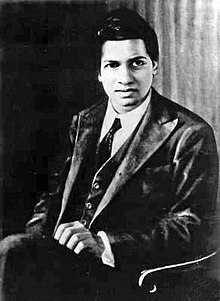
The Man Who Knew Infinity (film).jpgSrinivasa Ramanujan - OPC - 1.jpg

Starring Dev Patel as the prodigal Indian mathematician Srinivasa Ramanujan, the movie tells his incredible life story from living in poverty to studying at the University of Cambridge. A remarkable mathematician with a life worthy of the big screen, Ramanujan is responsible for ideas such as the Ramanujan Prime and partition formulae.

A Beautiful Mind
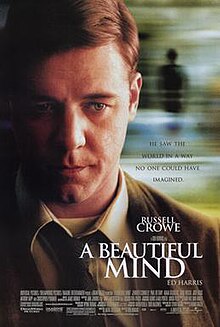
A Beautiful Mind Poster.jpgJohn Forbes Nash, Jr. by Peter Badge.jpg

This movie about economist John Nash earned 8 Oscar nominations and 4 wins, including for Best Picture! Starring Russell Crowe as Nash in an Oscar nominated performance, the film shows how the economist dealt with schizophrenia in the early stages of his academic career. The only winner of the Nobel Prize and the Abel Prize, Nash's works include studying game theory and nonlinear partial differential equations.

The Imitation Game
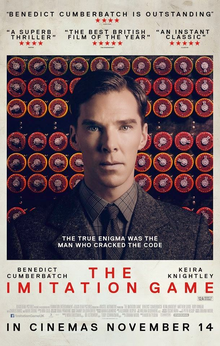
The Imitation Game (2014).pngAlan Turing Aged 16.jpg

Set during World War II and portraying the efforts to crack the enigma, this movie received eight Oscar nominations. Starring Benedict Cumberbatch as Alan Turing and Keira Knightley as Joan Clarke. Along with depicting the British scientists and code breakers, the film also focuses on how Alan Turing was punished by the British government due to his homosexuality.

Hidden Figures
Three women standing in the foreground. In the background a rocket is launching.Katherine JohnsonDorothy Vaughan.jpgMary Jackson portrait

(Clockwise from top right: Johnson, Jackson, Vaughan)


A lot of hard working mathematicians worked to get a man on the moon, but few were as discriminated on their mathematical journeys as three black, female scientists at NASA. Starring Taraji P Henson, Octavia Spencer, and Janelle Monae as, respectively, Katherine G. Johnson, Dorothy Vaughan, and Mary Jackson, this movie depicts the perseverance they showed in the face of adversity and the contributions they made to science and mathematics.

Theory of Everything
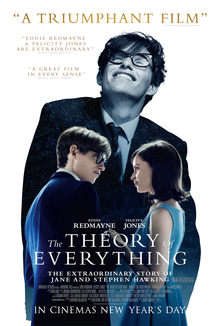
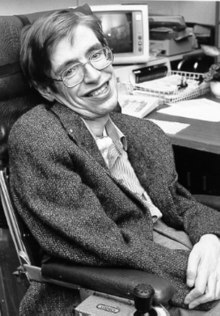
The Theory of Everything (2014).jpgBlack-and-white photograph of Stephen Hawking at NASA's StarChild Learning Center

Taking place during Stephen Hawking's years as a graduate student at the University of Cambridge, the film portrays Hawking struggling through motor neuron disease as he begins his long career studying black holes and the universe. Eddie Redmayne won an Oscar for his portrayal of the late astrophysicist, and the film itself was nominated for 5 Oscars in total.


Friday, March 11, 2016

Everyday Math: Math in the Movies

Coming soon to theaters near you: Mathematics


You may not run to the nearest theater to watch a mathematician prove a theorem, but math may be starring in your favorite movie without your recognition. This installation of Everyday Math features big screen hits that would not be possible without mathematics. Usually a math story line is intertwined with a romance, mystery, or comedy, which can make it easier to miss. Don't worry! We're here to point out our favorite films that carry a heavy dose of real math information. Grab your popcorn and make your next movie night a math-themed experience!


The Classic: A Beautiful Mind

A Beautiful Mind is based loosely on the real life story of John Nash, a Nobel Prize winner. Russell Crowe plays John Nash, a mathematical genius that specialized in game theory, differential geometry, and differential equations. Game theory can be utilized in fields such as economics and political science. In fact, Nash won his Nobel Prize in economics. In a famous scene, the film dramatizes Nash's discovery of the Nash equilibrium, a term used in economics and game theory. The film is said to take artistic interpretation of Nash's real life, but the mathematics in the movie are based on real theorems and theories. The director of A Beautiful Mind enlisted the help of a mathematics consultant, Dave Bayer of Columbia University, to ensure the mathematics were correct throughout the film. The movie contains some math jokes and facts that may only be clear to those well versed in mathematics. For an example, at the end of the film, a student wants to show Nash a proof exploring the idea that "finite Galois extensions are the same as covering spaces", which is actually a true statement. Along with his prowess in mathematics, A Beautiful Mind also demonstrates Nash's story of mental illness and schizophrenia. His schizophrenia initially impacts his career, but he is able to recover and take his place as one of the leading mathematical and economic minds of his time.
Watch the dramatized discovery of Nash's Equilibrium here!


The Romantic Drama: Proof

Proof, starring Gwenyth Paltrow and Anthony Hopkins, ties in universal themes with the backdrop of mathematics. The movie tells the story of 2 mathematicians, father and daughter, fighting mental illness and attempting to prove various mathematical theorems. Before he dies, Robert (the father) makes note of the interesting characteristics of the number 1729. The daughter eventually takes the place of her ailing father and dedicates herself to mathematics, even though she lacks formal training. Critics explain that the film realistically expresses the field of mathematics. It shows the nuances of proving a theorem, as well as the work and studying that are involved. Paltrow's character, Catherine, describes how she feels when she is attempting to solve a difficult problem, comparing "elegant proofs" to music. Proof also makes reference to other real mathematicians that may or may not be known to the public, such as Sophie Germain and Carl Friedrich Gauss. The director of the film consulted heavily with Timothy Gowers, a Fields medalist from Cambridge University.


For the Sport's Enthusiast: Moneyball


Watch a mental math scene here
Moneyball is the perfect flick for sports enthusiasts and statisticians alike. Starring Brad Pitt, Moneyball takes a twist on the average sports film, incorporating mathematics into the strategy of baseball. The movie is adapted from a book of the same name, written by Michael Lewis. The plot is based on the 2002 Oakland A's and General Manager Billy Beane. Billy Beane took a different route when gathering players, in order to deal with the economic impositions placed on the team. He searched for undervalued players, and looked specifically at statistical analysis in order to determine who was worth the cost. Other 'risky' plays like stealing bases and bunting were thrown out the window under Beane's guidance. The heavy dose of mathematics in the movie is centered on the Pythagorean Expectation, which is used to calculate wins based on runs scored and allowed. The sabermetric approach to baseball is placed head to head against more traditional methods, and definitely makes for an entertaining film.
Pythagorean Expectation


The Teen Rom-Com: Mean Girls

This may be an outlier of the group, as the movie is geared towards teenage girls and features all the facets of your typical high-school movie. Mean Girls star Lindsey Lohan plays a homeschooled girl who tries her luck at navigating high school for the first time. She comes across some new friends, and they attempt to steer her in the right direction. Cady Herring, Lohan's character, has an aptitude for math and even joins the math club. Her math teacher, played by Tina Fey, is featured several times in the movie explaining various high-school math concepts. Late in the movie, Cady attends a mathlete competition and is faced with a limits problem. There are also scenes where she is being tutored in calculus, and the math errors showed are typical errors a high school student would make. This movie is perhaps the epitome of teen-movies circa 2004 but the mathematics represented, although correct, definitely correspond with the high school setting.

Click here to watch the scene!

The Story of An Underdog: Good Will Hunting

Known as a classic math movie, Good Will Hunting is a must-see. This underdog tale has a romantic twist and stars both Matt Damon and Robin Williams. Matt Damon's character, Will Hunting is a troubled young adult who's life path weaved in and out of foster homes and trouble with the law. While working as a janitor at MIT, he is able to solve two math problems that were created for graduate students. A professor at MIT took interest in Will, noticing his affinity towards mathematics and genius-level ability. Along his journey, Will faces his inner struggles with the help of a therapist (Robin Williams), and meets a romantic interest who helps to shape his life. The math problem that Will faces on the board is actually a real problem, although not as difficult as it is made out to be. The problem involves a feature of graph theory, homeomorphically irreducible trees. Pictured below is the problem that sent Will into the realm of academia. Interestingly enough, the math brains behind the movie actually appeared on screen as well. Patrick O'Donnell, who had a minor roll in the bar scene, actually ran the math department at University of Toronto at the time. O'Donnell and John Mighton, who plays the professor's assistant, chose the equations and theorems used in the movie. 

See the solution here!